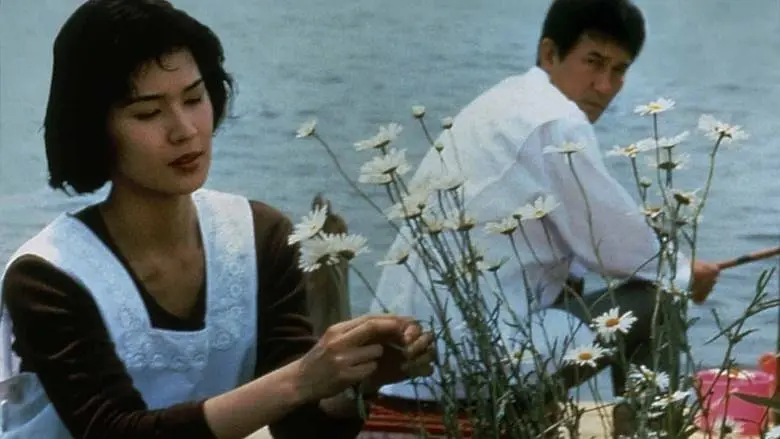
如果今村昌平不把那场发廊闹事当作小高潮来处理的话,尾声可能会更流畅些,往后明显能感到他开始规划各类收束,出现语气的断层。“鳗鱼”其实是一个良好的切点,连通切点的水缸,池塘都是良好的发生装置,但今村所执行的,一直是语气和客体行为的同质,他描述的荒诞现象统一可被理解成心境的具象载体;而始终不能像寺山修司这样的作者再进一步,将那些光怪陆离作为现实的补完(两类作者的创作逻辑就如同探究原材料和选择生成物的描述词的关系一般,前者具有更强的延伸性,后者使得环境被描述得更加严谨)。
——
There would be a more convincing ending if Shohei Imamura had avoided overdramatizing the chaos brought to the hair shop scene. After this incident, his deliberate intent to conclude the previously established relationships becomes apparent, resulting in an abrupt shift in tone.
Semiotically, unagi can be a fairly effective signifier, whose linguistic pairing between material and reference is so specific that one can easily infer the newly circumscribed signification from the object’s unusual associations in the film. The water tank and pond containing unagi are, in addition, determinate systems capable of repeatedly displaying reflections in unagi’s constant yet portentous swimming.
However, Imamura has always sought to keep narrative tone and character behavior tightly synchronized, almost in idealist terms, so that the droll phenomena he depicts in Unagi appear largely tied to outward links from the narrator’s spiritual form. This representation mode is distinct from another Japanese theatrical school, in which, as in the works of Shūji Terayama, grotesque beings are a contemplative source complementary to the material logic of reality.
In a linguistic sense, there is also a practical way to compare the two styles: What Shūji primarily concerns himself with is often the operative possibility of an unfamiliar view carrying the primordial substance of the world, while Shohei, on the other hand, focuses on the modificative value of the already ascertained ground, which might achieve a more articulate phase yet at the expense of things’ virginity.
—— 2021.09.27
Leave a Reply