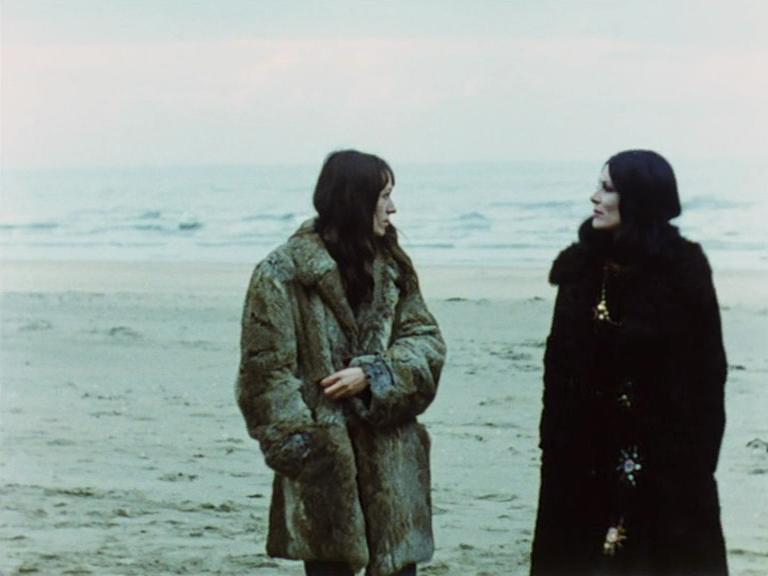
一種針對聲畫分離的使用邏輯:首先是針對視覺資訊的剝削,透過衰減運動過程的複雜度即凝滯資訊系統的搭建速率,激發觀看者對聲音敘事的需要以維持影像整體的規範流速(兩者當然並非簡單的加和關係,但透過豐化聲覺內容去轉移觀看者對視覺的關注確實是可行的);當觀看者對聲音的依賴被培養,兩個女人的話語力量便被形式強化,但杜拉斯選擇持續增添聲音的表意量(無論是使用修辭還是開篇定義的聲源條件)致使用以補償視覺流速的聽覺進程又超越了當下的容許,從而形成傾聽的負擔;於是有了聲音和畫面再次分離的必要,聲音在一個停頓後退場或內化,留下阻塞的畫面,憑藉聲音的印象漫流,循環一個新的衰減過程。這樣的處理方式在重返舞會現場時被破壞。在那裡聲音和視覺節律的非統一性被逐漸獨立出的畫面邏輯取代,敘事路徑變成進入自然空間的經歷,且杜拉斯似乎並非在有意尋求變奏或是回歸常態,這個場景更多在傳遞一次妥協:敘事者想讓幽靈被親眼所見,但無法削弱「看見」的力量,聲音的印象沒有被耗散反而成就了這個力量的伴隨。
A stylish logic applied to set apart the audio and visual contents when there is a formal goal:
- Above all, let the need for audio dimensions be the phasic goal. Given the irreversible hierarchy of vision and sound that characterize film experience, a natural solution is to drain out part of the scene’s visual dynamism so that the acknowledgement or articulation progress related to visually intentional motions within it is inhibited. When figures move without action, the audio is required because a view is always a “view of something” and that “something” needs its temporal definition (distinguished from a view in photography where the figure itself defines its survival) when it becomes a sequence. An important point is that relying on audio to animate the presence of the visual does not imply viewers’ refusal of the myth embodied in vision. The myth comes out only after the successful definition of its reference, and, if one wants, it can only be measured along the process of the voice entailing the lost context out of the vision, along the fissures within entailment.
- Once audio reliance is established, the second step is to re-inundate it. In dealing with the weighted non-diegetic voices, Duras continues loading the range and depth of their inflection through both literary meandering and the illustrative pre-title sequence, and thereby causes the occurrence of intermittent sound to be the occurrence of recurring burden. The literarization of the phonetic line conflates its explanatory function with locutive independence, by which interpretive freedom is bestowed upon the viewer, yet the procedure becomes more than working out the rebus at this turn: the sound and vision seem to conspire, and the truth of this presides not on the cultivation of analysis but on the motivation of audio solicitation. The burden of listening proceeds from the occasional impasse of hearing, that the surfeit of audio dynamism turns the need for voice-over into the need for its absence.
- So emerges there a tendency to resplit, and it indeed does so several times in the film. Duras has thus created a dynamic cycle, in which speech naturally aids the quiescent vision in building greater visibility until its provision begins to engender opacity, and in which the voice-over then ceases (without self-declaration), leaving the visual to consume the lingering possibilities it has acknowledged until the lack is renewed, and the reliance is reappealed.
This mechanism of the sound unevenly interfering with the vision is theoretically feasible. Yet Duras seems to write off their joint trajectory once the protagonist enters the banquet hall. It is not simply because the scene conveys limited conviction; the issue is that, given the film’s equipped form which has constructively scaled the affective pattern, the unexpected restoration of the hierarchy in which the audio becomes auxiliary to the vision at large at this moment is implausible. Duras does not rationalize this otherwise unquestionable progression that the narrative routine sticks to the gradual visualization of a space. The conventional phenomenon returns out of the blue, and we are not restored from seeing the world’s alienated projection. So I think of this eventual integration as more of a compromise than a fix: the narrator wants the spectre to be seen, yet they cannot undermine the power of seeing as it truly happens. When the lover’s visage is conjured behind the window, all possibilities tracing the ruins of voice are cut off. The vision reclaims its auditory accompaniment.
—— 2026.11.08
Leave a Reply